

Leading professional knowledge in emergency, crisis and bereavement for more than two decades
Institutional Resilience
Systemic protocols for municipalities and schools to maintain functional integrity during prolonged conflict.
Suicide Prevention
Compassionate, evidence-based intervention strategies with a focus on adolescents and their support networks.
Crisis Leadership
Equipping organizational heads with the psychological tools to lead with composure and human-centric judgment.
Expertise born from practice
What makes the Center unique is the combination of research, field experience, and leading systems through crisis — with a human language that restores to people a sense of capability, direction, and hope.
Guiding systems through crisis
Managerial and professional experience in facing emergencies and complex events within the education system.
Knowledge you can work with
Practical, clear, and applicable tools for professionals, parents, and organizations.
Human sensitivity
A professional language that creates no fear — only anchor, listening, and the capacity to act.
Practical hope
The ability to see possibility even in extreme moments, and to translate it into the next step.
A book written from the heart and from the field
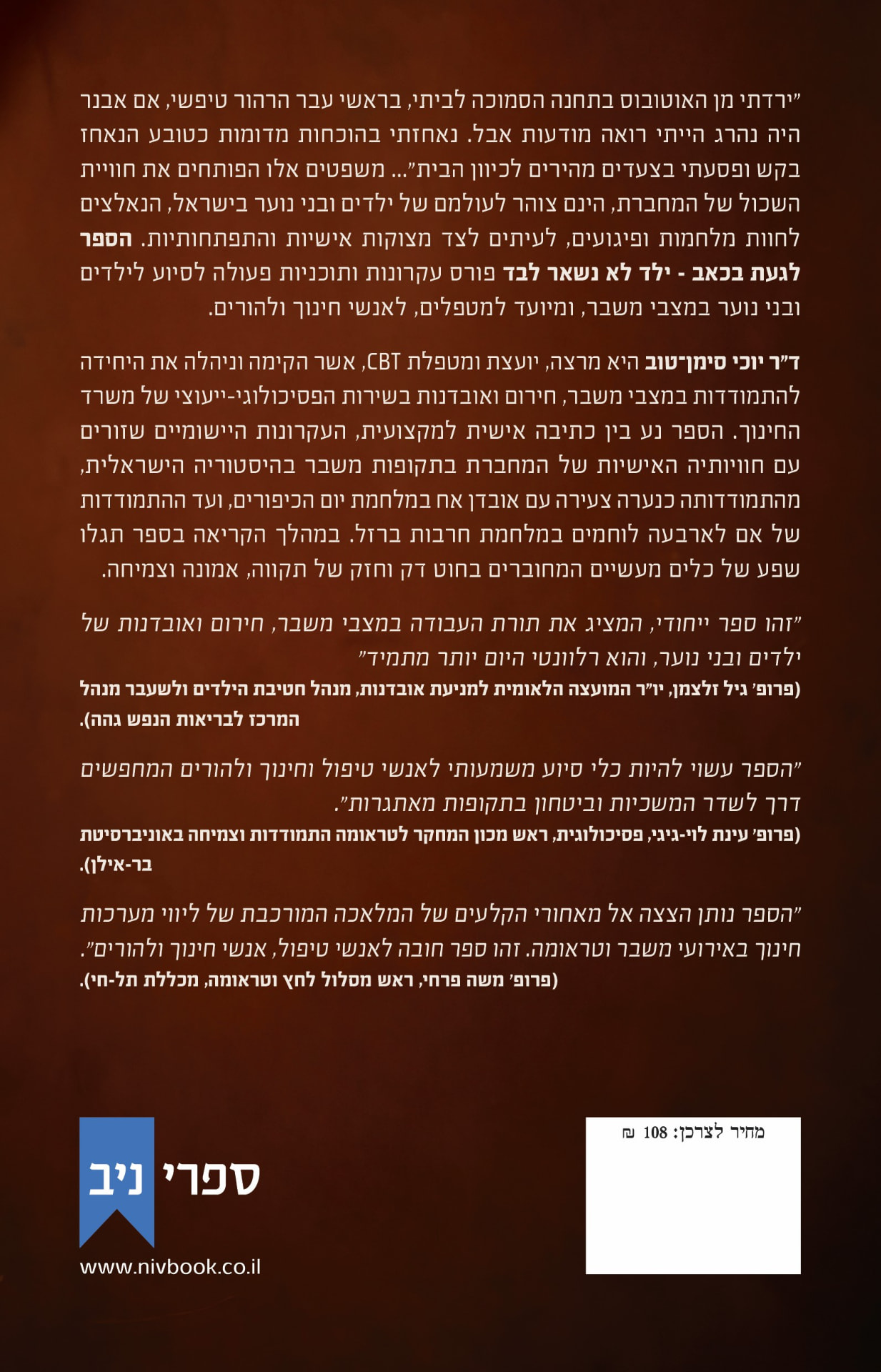
The book "To Touch the Pain – A Child Is Never Left Alone" weaves personal stories from formative events in the State of Israel with a structured professional teaching on coping with crisis, loss, and suicide. Alongside the human experience, the book offers clear professional guidelines, grounded in research.
The book is especially recommended for clinicians, educators, and parents.
״This is a unique book that presents the approach to working with crisis, emergency, and suicidality among children and adolescents, and it is more relevant today than ever.״
Prof. Gil Zalsman
Chair of the National Council for Suicide Prevention, Director of the Child Division and former Director of Geha Mental Health Center
1 / 3

How can I help?
The center offers lectures, professional consultation, books and professional content for people and organizations seeking to prepare systemically for crisis, strengthen organizational resilience, and act wisely during and after moments of crisis.
Sound practice addresses three time frames:Before the event — PreparednessDuring the event — Immediate and short-term initial managementAfter the event — Long-term support and rehabilitation of the system and the individual